Department of Sustainability and Planning, Aalborg University
Tightening the knot: Enhancing co-evolution of grid and off-grid electricity for universal access
Aalborg University
A.C. Meyersvænge 15, Copenhagen
Room: 2.1.043 (Globegangen)
03.05.2024 13:00 - 16:00

English

Hybrid
Aalborg University
A.C. Meyersvænge 15, Copenhagen
Room: 2.1.043 (Globegangen)
03.05.2024 13:00 - 16:00
English
Hybrid
Department of Sustainability and Planning, Aalborg University
Tightening the knot: Enhancing co-evolution of grid and off-grid electricity for universal access
Aalborg University
A.C. Meyersvænge 15, Copenhagen
Room: 2.1.043 (Globegangen)
03.05.2024 13:00 - 16:00
English
Hybrid
Aalborg University
A.C. Meyersvænge 15, Copenhagen
Room: 2.1.043 (Globegangen)
03.05.2024 13:00 - 16:00
English
Hybrid
- What are Kenya’s main strategies for green and universal electrification
- What are the main challenges and the potential for on- and off-grid coevolution?
- What are the options for future collaboration between Kenya, Denmark, and other international partners on green transformation?
Background
The African continent stands poised to exert significant influence on global energy trends due to factors such as its rapidly expanding population, urbanization, and burgeoning industrial infrastructure. However, the persistent lack of access to reliable electricity in Sub-Saharan Africa (SSA) remains a pressing challenge for policymakers. Projections suggest that approximately 0.6 billion people in the region will still lack access to electricity by 2030. This is attributed in part to the prevailing grid-centric nature of power sector development, compounded by associated challenges such as slow policy and investment plan development and deployment, as well as persistent technological and financial barriers.
Adding to the challenge is the urgent need to pursue SDG7 access targets - for both electrification and clean cooking - in line with the climate change ‘Nationally Determined Contributions’ (NDCs) to the Paris Agreement. To this end, electric cooking technologies and e-mobility are emerging as a potentially game-changing set of solutions expected to boost electricity demand. The green technology transition creates both risks and opportunities in terms of local job creation and value capture, last-mile connectivity, and the growth of e-waste.
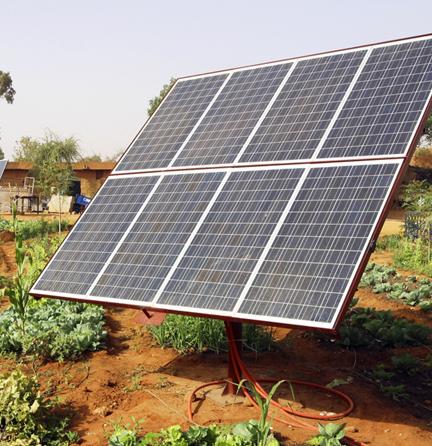
Both grid and off-grid systems are anticipated to play pivotal roles in achieving universal electricity access in Sub-Saharan Africa by 2030. Notably, the ongoing transformation of off-grid electricity has attracted attention from policymakers, the private sector, and civil society organizations as innovations emerge, bolstering their cost-effectiveness, efficiency, and reliability. Consequently, systemic integration and coevolution of grid and off-grid systems are deemed imperative. However, the multidimensional and intricate nature of this evolution and coevolution present unprecedented effects – both positive and negative – on the quest for universal electrification, underscoring the need for comprehensive analysis and scholarly research to inform policy design aimed at effectively minimizing trade-offs while maximizing synergies in the evolution and coevolution of grid and off-grid electricity toward universal electrification.
To address these issues, this seminar, and the PhD study on which the keynote presentation is based, focuses on Kenya as a case study. The sectoral system of innovation studies framework and political economy theory was used. Through methods such as interviews, focus group discussions, and storytelling, the research seeks to understand evolution, co-evolution, and innovation in the electricity sector, while also examining the political economy factors shaping and directing this transformation. It seeks to identify the drivers, risks, and uncertainties inherent in the coevolution process, and suggest key policy recommendations to foster effective sectoral growth.
Programme
- Welcome remarks by Arne Remmen/Margrethe Holm Andersen
- Presentation by Mbeo Calvince Ogeya, Stockholm Environment Institute (SEI) - Africa
- Discussants/panel:
- James Haselip, Senior Adviser, UNEP Copenhagen Climate Centre
- Morten Blomqvist, Senior Adviser, Danish Ministry of Foreign Affairs
- Rebecca Hanlin, Professor, DSI/NRF Trilateral Research Chair in Transformative Innovation, the 4IR & Sustainable Development in the College of Business and Economics, University of Johannesburg.
- Open discussion, chaired by Margrethe Holm Andersen
- Wrap-up and closure by Arne Remmen/James Haselip.
About the main speaker
Mbeo Ogeya is a Research Fellow at SEI - Africa Center and is currently pursuing a PhD in Innovation and Sustainable Development at Jaramogi Oginga Odinga University of Science and Technology (JOOUST) in Kenya. He is a member of AfricaLICS and an AfricaLics Visiting Fellow (2023 cohort). He joined SEI in 2016, specializing in energy systems modeling. He has extensive experience in energy policy, mini-grid development, climate change mitigation, and sustainable development and has worked at the Kenya Industrial Research and Development Institute, and has previously served as a technology mentor at the Kenya Climate Innovation Center (KCIC). He has led and participated in various projects across Africa and acted as a consultant to a range of different national and international organisations.
Organisers
Department of Sustainability and Planning, Aalborg University in collaboration with UNEP Copenhagen Climate Centre and Margrethe Holm Andersen (Independent consultant, Senior Research Fellow at Jaramogi Oginga Odinga University of Science and Technology (JOOUST) and member of the AfricaLics Secretariat, hosted by African Center for Technology Studies (ACTS) in Kenya.